One of the interesting things about studying Earth's past is just how tremendous the changes have been, and how much we can learn about the earth system by studying them. In many cases they provide our only insight into what we can expect from future climate changes. We can look at past forcings and responses in the earth system and ask what happens when the oceans become acidified, or when CO2 exceeds 400 ppm, or even more.
We spent some time talking about past climate change, but most of what we looked at was in the last 65 million years (myr). This sounds like a long time, but it is just a hair over 1% of Earth's history. Check out this report from the National Academy of Science about climate change in deep time. You can read it online below, or download the PDF.
Showing posts with label Climate Change. Show all posts
Showing posts with label Climate Change. Show all posts
Sunday, February 5, 2012

Tuesday, January 31, 2012
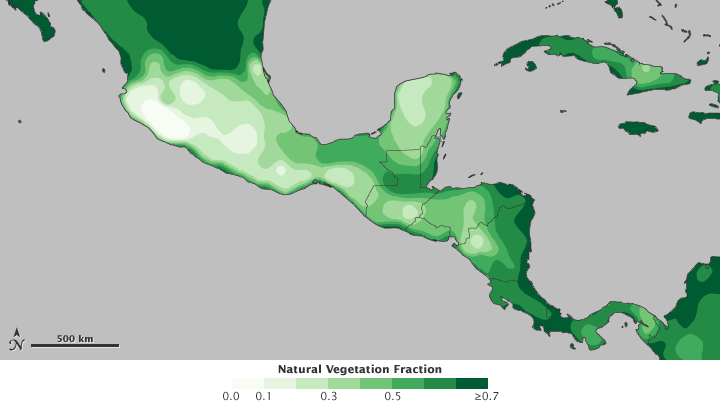
Deforestation, Maya, and Climate Feedbacks
Also, continuing on the forcings and feedback discussion that came up in class today about greenhouse gasses, here is a nice overview site of the roles of non-condensing greenhouse gasses, particularly CO2, in climate forcing, and water vapor and clouds as feedbacks. Again, picking up on the material covered in class today, it shows how you can use climate models to perform virtual experiments on the earth system. If you want to try this yourself, see the edGCM in the previous post.
Subscribe to:
Posts (Atom)